
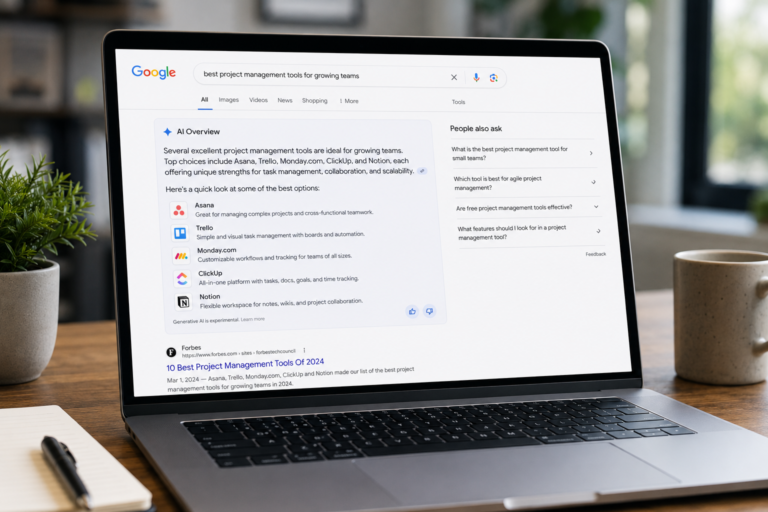
The New Reality of Google Search
Search is changing faster than most people realise.
Over 25% of all Google searches now trigger an AI Summary (or Overview), according to a Conductor study of 21.9 million searches. That number is climbing every month.
When an AI Summary appears, Google doesn’t just list websites and let the searcher choose. It reads through the top results, pulls the most credible information, and presents a direct answer at the very top of the page, crediting only the sources it trusts.
If your website isn’t one of those cited sources, you’re invisible for that search.
This guide breaks down exactly what Google looks for and how to start earning those citations.
What Is a Google AI Summary?
You must have noticed that Google searches look a little different lately. Almost everyone has.
That box sitting at the very top of the results page, summarising everything before you even scroll? That’s a Google AI Summary, and it’s changing how people find information online in a very big way.
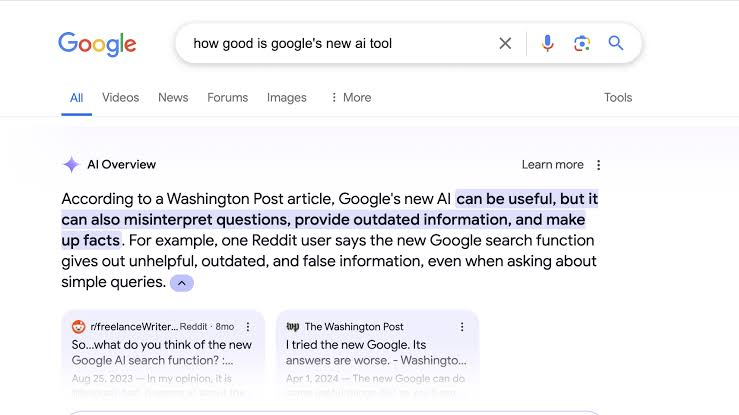
Instead of pointing people to 10 blue links and letting them choose, Google now reads the top results itself, identifies the most credible and useful content, summarises it, and credits its sources directly in the answer. This comes right above every organic listing, ad, and yes, above your competitors too.
Imagine the world’s most well-read research assistant handing your potential client a report before they ever visit your website. If your name isn’t in that report, the conversation starts without you.
That’s not a small problem. That’s a visibility crisis hiding in plain sight.
Why Getting Cited Changes Everything
Most SEO guides will tell you to focus on ranking. “Get to page one,” they say, and the clicks will follow. That logic has worked for years.
In recent times, there’s been a major shift. When a Google AI Summary appears at the top of a search result, the reader often gets exactly what they came for before they ever scroll down to your link: no click, no visit, not even a chance to make an impression.
The opportunity, however, is real. Seer Interactive’s research, which tracked 25.1 million organic impressions across 42 organisations, found that brands cited within AI Summaries earn 35% more organic clicks than competitors who aren’t cited at all.
Getting cited isn’t a nice bonus anymore. It’s just where the real visibility lives.
What Google’s AI Actually Looks For
You’d think Google’s AI picks the most popular website. Actually, it doesn’t.
It picks the most useful one. “Useful”, in Google’s language, looks very specific.
Google’s AI doesn’t read your whole article and give you marks out of ten. It scans for passages that answer a question clearly, completely and confidently.
If your answer is buried three scrolls deep, wrapped in vague language and qualifiers, it gets passed over without a second look.
Before you go searching for a secret formula, Google itself confirms that there are no special optimisations required to appear in AI Summaries beyond strong, fundamental SEO practices.
What that really means is that the businesses getting cited aren’t doing anything mysterious. They’re simply publishing content that genuinely helps the people searching for it.
If you’re doing everything right but still see zero traction, it often comes down to specific content execution flaws that block your growth.
The content that consistently gets cited shares four qualities:
- Direct answers up front: answer the question immediately, not after a long warm-up
- Clean, structured formatting: think headers, bullet points and short paragraphs that are easy to extract
- Verified facts and cited sources: every claim should be backed by something real and traceable
- Fresh, current content: outdated information is a quiet disqualifier that Google never announces
None of this is complicated. The challenge isn’t knowing what to do. It’s doing all four consistently, every single time.
Five Things You Can Do Right Now
Knowing what Google looks for is one thing, but actually doing it consistently is where most businesses fall short. The five steps below are a good place to start:
1. Answer the question in your opening paragraph
Whatever your article is about, state the answer clearly at the very top. Google’s AI extracts passages and heavily favours content found early on the page.
2. Format your content for easy reading
Use short paragraphs, clear subheadings, and bullet points where they make sense. Content that’s easy for a human to scan is also easy for AI to extract and summarise.
3. Build a proper FAQ section
Each question needs a clean, self-contained answer of around 40 to 60 words, one that makes complete sense without needing the rest of the article for context. FAQ blocks are among the most cited content formats in AI Summaries.
This strategy works best when you match your answers directly to the actual problems real buyers type into search engines.
4. Cite real, verifiable sources
Every claim you make should point to something credible. Well-sourced facts build trust with readers and signal authority to Google’s AI.
5. Revisit your content regularly
Set a reminder every few months to refresh your most important pages. Update old statistics, sharpen your answers, and make sure everything still reflects what’s actually true today.
Making your content count
Earning a spot in Google’s AI summaries doesn’t require a secret formula or complex technical tricks. It simply requires you to be the most helpful, clear, and reliable answer on the web for your audience.
When you focus on structured formatting, immediate answers, and verified data, both human readers and search engines will naturally trust your site.
If you’re ready to get your website noticed but don’t want the hassle of managing it all yourself, we can help. Request a quote or email us today, and let’s get your business cited where it matters.
Recent Articles

DelaInk Content & Copywriting Internship Scholarship 2026

How Content Repurposing Can Make Your Content Work Harder

Why Writing for Everyone Means Reaching Nobody

How to Measure the Business Value of Your Content

Why Cheap Content Costs More Than You Pay For It